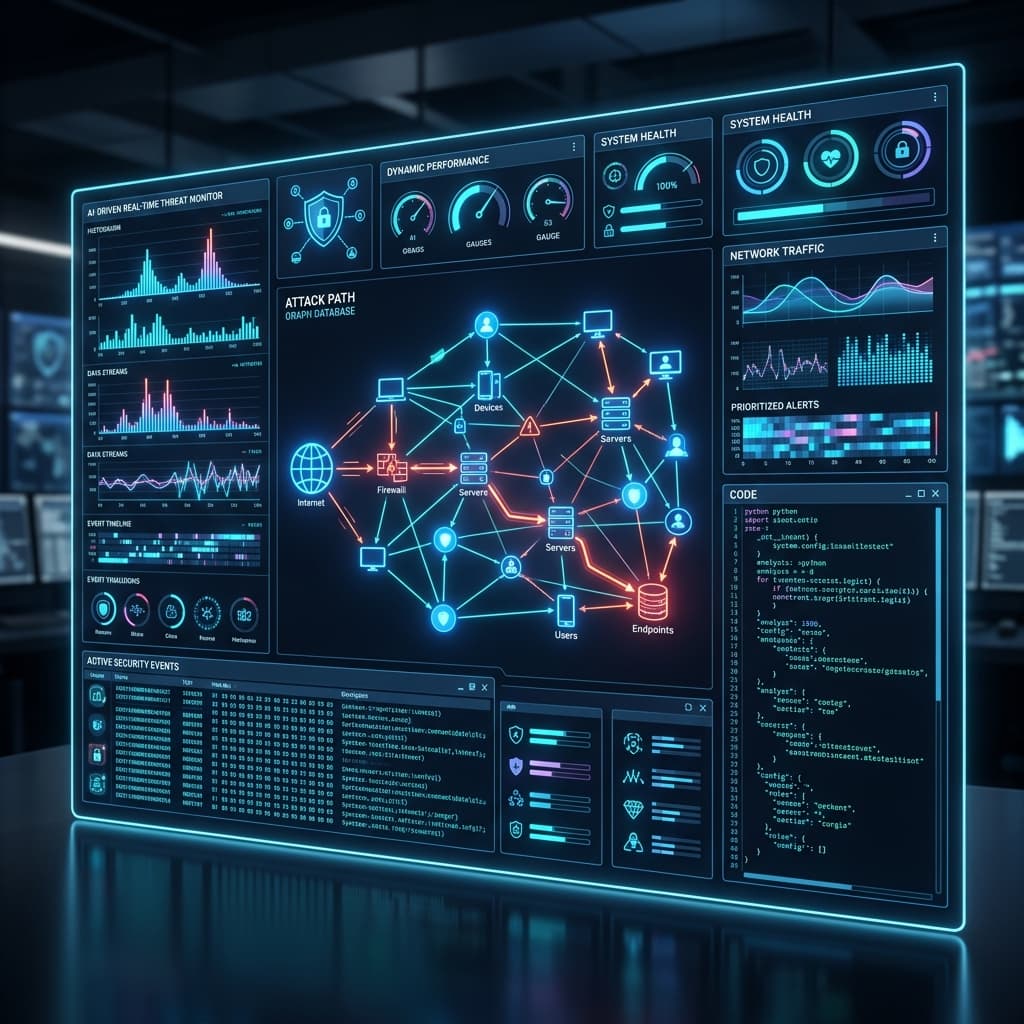
Until recently, a security audit was a static event: you ran a scanner, received a 200-page PDF, and spent the next six months trying to figure out what was a priority.
In 2026, this approach isn't just inefficient; it's dangerous. With the advent of Agentic AI, threats evolve in real-time. Fortunately, defense tools have also evolved. Today, the focus has shifted from simply listing vulnerabilities to continuous attack path validation.
Here are the 5 tools that define the gold standard of auditing and protection in 2026.
1. NodeZero (Horizon3.ai)
NodeZero has established itself as the leader in Autonomous Pentesting. Unlike a traditional scanner, NodeZero doesn't just tell you that you have an open port; it tries to exploit it (safely) to prove whether that flaw actually leads to a data compromise.
Why It Stands Out in 2026:
- Fault Chaining: Its ability to chain small configuration flaws into digital "kill chains" is essential for any CISO. An isolated open port may seem harmless, but NodeZero reveals how it connects to other weaknesses to create a complete attack path.
- Actionable Reports: Instead of a generic list of CVEs, NodeZero generates a visual attack path map with clear priorities based on real impact in your environment.
- Continuous Validation: Unlike annual pentests, NodeZero can be run weekly or even daily to ensure new infrastructure changes haven't introduced vulnerabilities.
Ideal for: Mid-to-large enterprises that need continuous security posture validation.
2. Novee
If your environment is purely focused on cloud and digital identities, Novee is the tool of choice. It uses AI agents that think like adversaries, adapting their tactics as they encounter obstacles.
Differentiators:
- Shadow AI Detection: Identifies AI tools your employees use without IT's knowledge that may be leaking corporate data to external servers.
- Identity Mapping: Analyzes the complete permissions chain in multi-cloud environments (AWS, Azure, GCP), identifying accounts with excessive privileges.
- Adaptive Adversarial Simulation: Novee's AI agents don't follow fixed scripts. They adapt in real-time, simulating a real attacker's creativity.
Ideal for: Startups and cloud-native companies with multi-cloud architectures and remote teams.
3. Pentera
Pentera has specialized in Automated Security Validation at enterprise scale. The big differentiator in 2026 is its ability to test not just the infrastructure, but also the effectiveness of your detection tools.
What Pentera Validates:
- EDRs and SIEMs: Ensures your alerts actually work when the attack is real, identifying blind spots in your monitoring tools.
- Response Playbooks: Tests whether automated incident response procedures work correctly end-to-end.
- Network Segmentation: Verifies whether micro-segmentation is actually preventing lateral movement between segments.
Ideal for: Large corporations with established SOCs (Security Operations Centers) that need to validate the effectiveness of existing security investments.
4. Checkmarx One Assist
For software developers, Checkmarx One Assist has become the indispensable copilot. It integrates AI directly into developers' workflows.
2026 Capabilities:
- Real-Time Analysis: Not only finds vulnerabilities in code but suggests the exact fix and validates whether the new code is secure before the commit.
- Multi-Language Support: Analyzes code in JavaScript, TypeScript, Python, Go, Rust, Java, and 30+ additional languages.
- Supply Chain Analysis: Checks not only your code but all transitive dependencies, identifying hidden risks in npm, PyPI, and other registries.
- IDE Integration: Works directly in VS Code, JetBrains, and Neovim, providing real-time feedback as the developer writes code.
Ideal for: Development teams practicing DevSecOps who want security integrated into the workflow.
5. Cycode
With the increase in software supply chain attacks, Cycode has become vital. It uses a contextual intelligence graph to track every line of code from development to the cloud.
Key Features:
- Secrets Detection: Ensures no "secret" (like API keys, tokens, or passwords) is accidentally exposed in Git repositories — public or private.
- CI/CD Pipeline Protection: Monitors changes in build and deploy pipelines, detecting malicious injections in CI/CD scripts.
- Provenance Tracking: Maps the origin of every dependency and component, ensuring no malicious code enters the supply chain.
- Real-Time Alerts: Immediately notifies when a secret is committed or when a vulnerable dependency is added to the project.
Ideal for: Organizations with multiple repositories and complex CI/CD pipelines.
Quick Comparison
| Tool | Primary Focus | Automation | Est. Pricing | |------|--------------|------------|-------------| | NodeZero | Autonomous pentest | Full | Enterprise | | Novee | Cloud + Identities | Adaptive | Mid-market | | Pentera | Defense validation | Full | Enterprise | | Checkmarx | Code and DevSecOps | Integrated | Per dev/month | | Cycode | Supply Chain | Continuous | Per repo/month |
Conclusion
Choosing the right tool in 2026 means looking beyond marketing promises and seeking real validation. Modern security isn't about closing every door, but about knowing exactly which paths an attacker would follow and blocking them intelligently.
At Landingfymax, we apply this same mindset of precision and security in the development of every project. We create landing pages and institutional websites that aren't just the face of your company, but digital fortresses optimized for performance and protected against modern web vulnerabilities.
Is your digital presence protected by state-of-the-art tools? Discover how we build the web of the future at Landingfymax