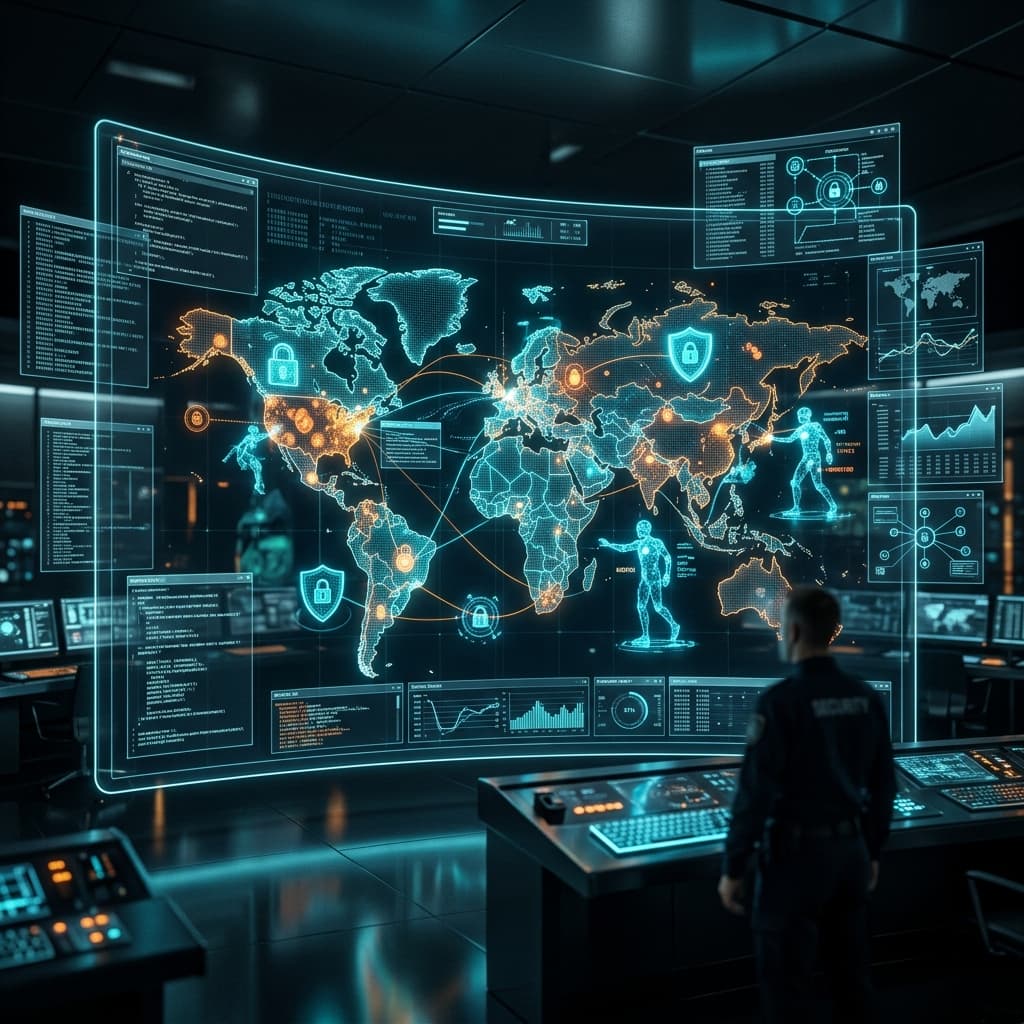
The notion that cloud infrastructure is inherently secure simply because it is geographically distant from the end user has become obsolete. Modern conflicts — combining cyber warfare, hybrid operations, and Artificial Intelligence — demonstrate that data centers and cloud providers are now high-value strategic assets operating at the heart of an invisible battlefield.
More than physical attacks, today's dominant vector is digital, automated, and highly scalable. This shifts the focus from traditional security based on physical perimeters to distributed resilience and real-time response. If your business operates in the cloud, you are not just hosting data; you are managing a defense asset.
The End of “Security by Location”
Historically, organizations relied on three premises that have proven fragile today: geographic redundancy as absolute protection, the invulnerability of major providers, and the improbability of large-scale physical attacks.
These premises have been weakened by three critical technical factors:
- Distributed and Coordinated Attacks: Modern attacks target multiple layers simultaneously, from DNS to management APIs and edge networks (CDNs).
- Dependency on Centralized Services: Even distributed architectures depend on logical single points of failure, such as identity providers and control planes.
- Hybrid Warfare: Physical infrastructure still matters when logistical sabotage or power outages affect the systems that sustain server operations.
The Role of Artificial Intelligence in the Digital Battlefield
AI acts as an accelerator for both attackers and defenders, creating an arms race where speed is the primary currency.
Offensive AI: The Automated Attacker
Attackers use AI to perform massive reconnaissance of attack surfaces in seconds, optimize DDoS attacks with dynamic payloads, and generate custom exploits based on code patterns identified in real time. AI-assisted exploration makes social engineering nearly impossible to detect for the untrained human eye.
Defensive AI: The Proactive Guardian
On the defensive side, AI is indispensable for detecting anomalies that deviate from traditional baselines. Automated response allows for the dynamic blocking of threats and the isolation of compromised services before the blast radius expands. Additionally, automated Red Teaming enables continuous resilience testing.
The New Paradigm: Resilience Instead of Prevention
In 2026, total prevention is an illusion. The modern focus of strategic cybersecurity must be resilience. This implies three fundamental pillars:
- Assume Breach: Designing systems with the premise that failures and intrusions will occur.
- Reduce Blast Radius: Using rigorous segmentation and the principle of Least Privilege to isolate damage.
- Recovery-First Design: Prioritizing immutable backups, automatic failover, and Infrastructure as Code (IaC) to rebuild environments in minutes, not days.
AISecOps: The Evolution of Security Operations
The concept of AISecOps (Artificial Intelligence Security Operations) emerges as the necessary response to the complexity of intelligent agents. It requires rigorous access control for AI models, continuous auditing of automated decisions, and, crucially, operational kill-switches that allow for immediate human intervention in critical cases.
Model observability — monitoring drift and unexpected outputs — becomes as important as traditional network monitoring.
Practical Application: How to Adapt Your Architecture
For leaders looking to protect their assets today, the technical checklist should include:
- Infrastructure: Implementation of Active/Active Multi-region and strategic use of Edge Computing.
- Security: Adoption of Zero Trust architecture and mandatory Multi-Factor Authentication (MFA) for all critical operations.
- Operation: Constant testing through Chaos Engineering and monitoring with intelligent AI-based alerts.
Conclusion
Cloud security has moved from being a matter of geographic location to a matter of architecture, automation, and strategic resilience. The integration of AI accelerates the pace of threats, making response speed a vital competitive advantage.
Organizations that adopt AISecOps practices and design resilient systems from the ground up not only protect themselves better but also ensure business continuity in an unpredictable global scenario.
Is your infrastructure prepared for the new era of digital security? At Landingfymax, we help companies build robust, secure digital presences optimized for the challenges of 2026.