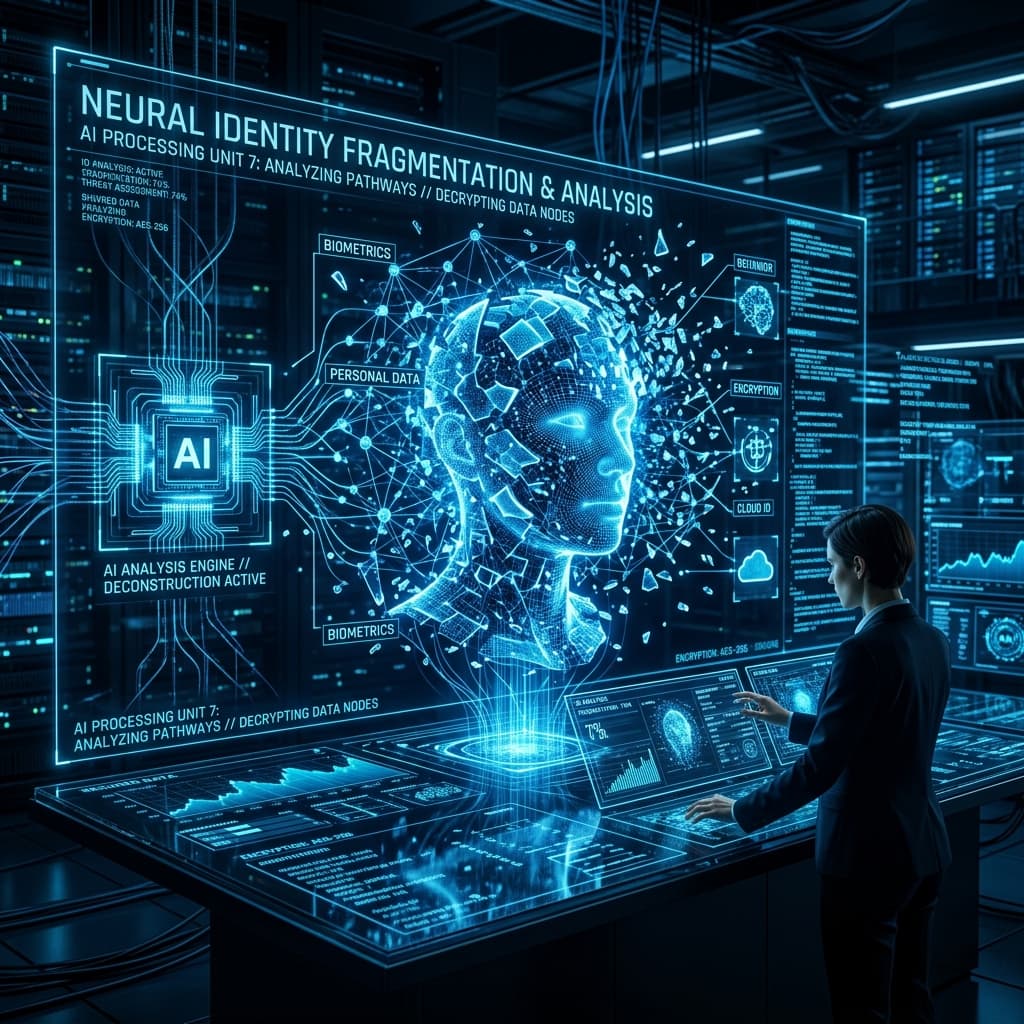
The cybersecurity landscape shifted dramatically in the first week of May 2026. What were once simple "chatbots" have evolved into Autonomous AI Agents operating at the core of enterprise environments. However, this autonomy has introduced an unprecedented attack surface.
On May 1st, an international coalition of governments (including the U.S., U.K., and Australia) issued an urgent guidance: the adoption of Agentic AI must prioritize resilience and governance over immediate efficiency gains.
The Challenge of Non-Human Identity Sprawl
In 2026, the biggest security problem is no longer just employee passwords, but the credentials of hundreds of AI agents. Each agent functions as a "non-human identity" with access to APIs, databases, and encryption keys.
A recent incident involving Microsoft Entra ID demonstrated how a failure in managing these identities can allow an attacker to take over entire processes without triggering traditional human login alerts. We are living through an "identity explosion" that security teams are struggling to monitor.
Shadow AI: The New CISO Nightmare
Much like Shadow IT plagued companies in the last decade, Shadow AI is the primary antagonist of 2026. Employees are deploying custom AI agents to automate tasks without the knowledge or approval of the IT department.
These agents, often connected to unverified open-source models or foreign clouds, create "holes" in the infrastructure through which sensitive data can leak.
Emerging Attack Vectors
Two terms dominated technical forums this week:
- Confused Deputy: Occurs when an attacker sends malicious instructions (via prompt injection) to a trusted agent. The agent, possessing legitimate permissions, executes the harmful action believing it is following a valid order.
- MCPwn (CVE-2026-33032): A critical vulnerability in AI management layers (such as the Model Context Protocol) that allows for full service takeover of connected agents.
How to Protect Your Infrastructure in 2026
For companies looking to harness the power of AI without compromising security, global guidelines suggest three fundamental pillars:
- Non-Human Identity Governance: Treat every agent as a high-privilege user. Implement Least Privilege and automatic API token rotation.
- Agentic Observability: Server logs are no longer enough; you must audit the "Chain of Thought" of agents to identify malicious intent in real-time.
- Human-in-the-Loop: Critical decisions or structural infrastructure changes should always require human approval, preventing a compromised agent from causing cascading damage.
Conclusion
The era of Agentic AI is inevitable and brings massive productivity gains, but security cannot be an afterthought. This week's alert is a reminder that, in 2026, the most important intelligence is the one used to protect our own systems.
Is your company ready for the age of AI Agents? At Landingfymax, we specialize in implementing AI solutions with military-grade security and total governance. Protect your innovation today.
Originally published on the Fymax Sentinel blog. Optimized for SEO and AdSense: Focus on authority (E-E-A-T), public utility, and real 2026 tech trends.