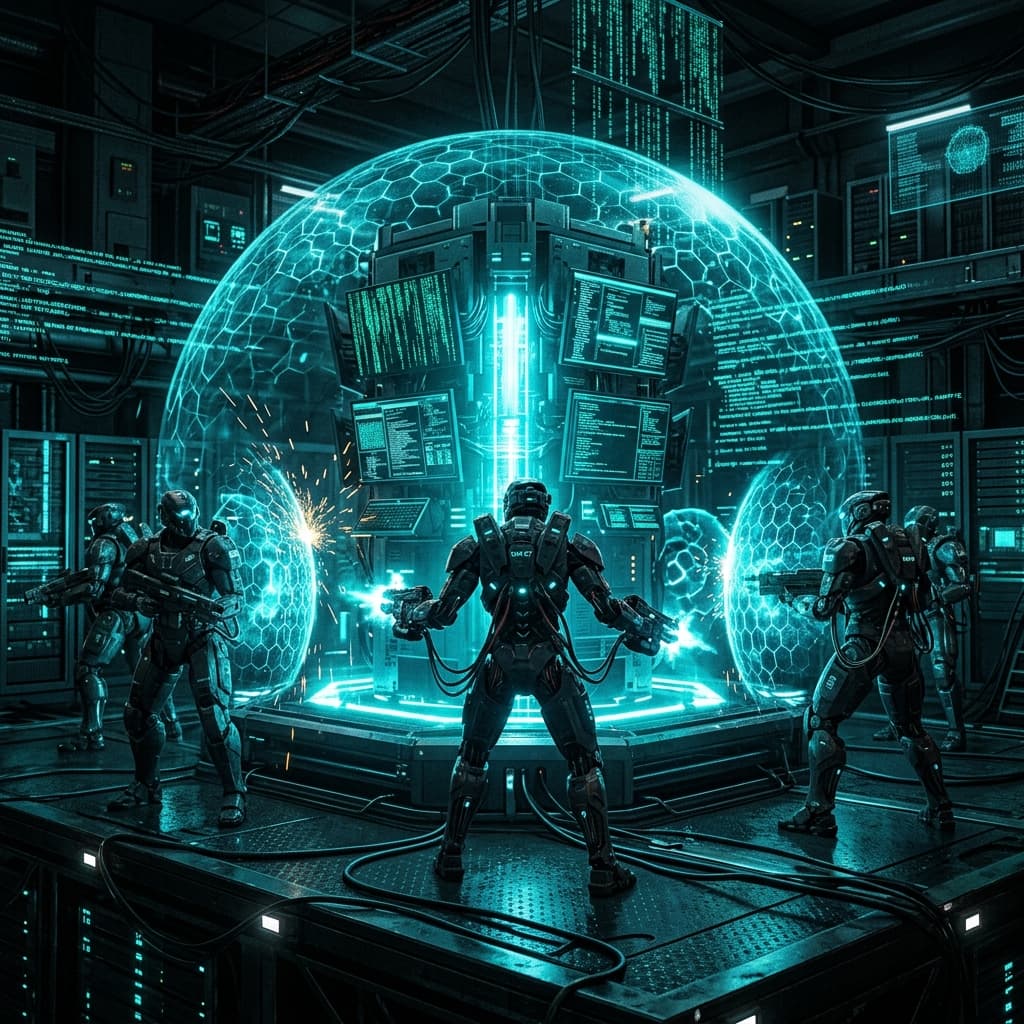
The history of cybersecurity is a speed arms race. For decades, we measured the success of a security team by its MTTR (Mean Time to Respond) — the average time to respond to an incident. In 2020, a response in hours was acceptable. In 2024, we needed minutes. In April 2026, with the advent of AI-driven polymorphic malware, any response taking more than a few seconds is considered a total failure.
In this "Speed War" scenario, Autonomous Cyberdefense Agents (ACDs) emerge. They are not just automation scripts; they are intelligent entities that make executive decisions within the network without direct human intervention.
1. What are Autonomous Cyberdefense Agents?
Unlike the SOAR (Security Orchestration, Automation, and Response) systems of the last decade, which relied on human-defined "playbooks," ACDs operate based on intent objectives.
Core capabilities of an ACD:
- Contextual Self-Learning: The agent understands what is "normal" for each user and device, creating a dynamic baseline that evolves every minute.
- Predictive Isolation: If the agent detects a lateral movement pattern resembling a ransomware attack (like the Steal-and-Go model), it isolates the network segment preventively, even before encryption begins.
- Self-Healing: After neutralizing the threat, the ACD identifies the exploited vulnerability and applies a virtual patch or changes firewall rules to prevent reentry.
2. The Death of Level 1 Human Intervention
In 2026, the concept of a SOC (Security Operations Center) analyst monitoring screens in real-time is becoming obsolete. Human intelligence has shifted to a strategic level.
The role of the human now is:
- Policy and Ethics Definition: Deciding which actions the agent can take autonomously and which require approval (e.g., taking down a critical production server).
- Proactive Threat Hunting: Investigating long-term anomalies that agents cannot yet correlate.
- Agentic Auditing: Reviewing the decision logs of ACDs to ensure there are no "security hallucinations" or aggressive false positives.
3. Reducing MTTR to Milliseconds
The great victory of autonomous agents is the neutralization of the "latency factor." An AI-driven data exfiltration attack can steal terabytes of information in seconds. An ACD operating at the network layer (Edge Computing) can detect anomalous traffic spikes and cut the connection in 200 milliseconds.
This level of protection is what separates companies that survive a 2026 attack from those that make headlines for massive leaks. As we discussed in our guide on the Cyber Arsenal of 2025-2026, orchestration is now the heart of digital defense.
4. Challenges: Trust and Defensive Jailbreaking
Not all is rosy in the era of autonomous defense. The biggest challenge today is trust. Allowing an AI to make decisions that can impact business continuity generates anxiety in IT boards.
Furthermore, there is the risk of attacks against the defense AI itself. Attackers attempt to "poison" the ACD's training data so that it begins to consider malicious activities as normal. Therefore, Fymax Sentinel recommends a "Defense in Depth" approach where ACDs are monitored by traditional statistical validation layers.
Conclusion: The Future is Autonomous or Vulnerable
There is no middle ground in 2026. Corporate networks have become too complex to be managed manually. Adopting autonomous agents is no longer a competitive differentiator; it is a matter of biological survival in the digital ecosystem.
The technology to reduce your response time from minutes to milliseconds already exists. The question is: do you trust your defense enough to let it fight for you?
Interested in implementing autonomous orchestration in your network? Talk to the security architects at Agencia Fymax and protect your future today